Apple Wins Global Smart Phone Crown, Nokia 3rd Now

Apple, followed closely by Samsung Electronics, overtook Nokia in global smartphone market share during the second quarter.

Stanford researcher exposes Microsoft's Wi-Fi database

A Stanford University researcher has created a Web page allowing people to query Microsoft's massive database for the locations of their--or someone else's--laptops, cell phones, and other Wi-Fi devices.

Logitech Wireless Solar Keyboard

We met with Logitech the other day to see some of the company's upcoming products (sorry, we can't tell you about them yet, but there's some cool stuff coming), and the folks there offered to give away one of Logitech's nifty new solar-powered wireless keyboards for Windows users, the K750.

HTC 10-inch Puccini tablet outed in official-looking renders

Thanks to new leaked images, we now have a good idea as to what to expect from the 10-inch HTC Puccini.....

Acer's Aspire Ethos 8951G review: Need a laptop with a detachable touch pad?

Few things surprise us more than when laptop shoppers tell us that though they are planning to keep their new computer permanently chained to a desk (to essentially act as a desktop PC), they intend to buy a 13-inch (or even a 14- or 15-inch) laptop. If you're removing portability from the equation completely, there's little reason to ignore one of the most fun categories of laptops: the massive 18-inch desktop replacement.

Friday, July 15, 2011

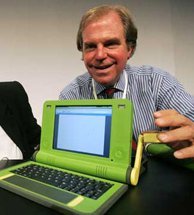
OLPC: Give One Get One Campaign Starts Over

The One Laptop Per Child (OLPC) project decided to launch once again its Give One, Get One campaign, in hope that this way more laptops will be delivered to children living third world countries.


This time the campaign has been launched in both Europe and the US and will close on December 31.
As expected, Amazon will be the only one handling the funds.
In case you have forgotten, the campaign goes as follows: those who choose to buy $399 laptop will thus help the OLPC send another such computer to a person in a third world or developing country.
The first Give One, Get One campaign started November 12 and was supposed last initially only two weeks. The program was only available in North America.
Later on, It was decided to keep it going until the end of the year. Officially, the program had been extended because "many people have asked for more time to participate, either individually or in order to organize local and national groups to which they belong". Or at last that's what OLPC founder Nicholas Negroponte claimed at the time.

Toshiba Announces The First 512 GB SSD

The first 2.5-inch 512-gigabyte GB SSD was born in the Toshiba clan, the company eagerly announced.

The Japanese company stated that its new SSD model is based on 43 nm Multi-Level Cell NAND and it will be used in notebook computers, gaming and home entertainment systems.

"The solid state drive market is evolving rapidly, with higher performance drives to meet market requirements, and differentiated product families targeted for appropriate applications,” said Mr. Kiyoshi Kobayashi, Vice President of Toshiba Corporation's Semiconductor Company. "This new 43nm SSD family balances value/performance characteristics for its targeted consumer applications, through use of MLC NAND and an advanced controller architecture."

In addition to the 512GB drive, Toshiba's 43nm NAND SSD family also includes smaller SSD in size of 64GB, 128GB, and 256GB, available in both 1.8-inch or 2.5-inch drive enclosures or as SSD Flash Modules.

The second generation SSDs utilizes an advanced MLC controller, thus achieving higher read/write speeds, parallel data transfers and wear leveling to optimize performance, reliability and endurance. According to Toshiba, the read speed of the new drives can reach a maximum sequential read speed of 240MBp) and maximum sequential write speed of 200MBps.

In addition, the drives offer AES data encryption to prevent unauthorized data access.

Sony Announces Adds Four New Colors To Its PSP Lineup

Four new Sony PSP colors will be released this Spring, the Japanese giant announced. For the time being, the release has been scheduled only for Japan


The new additions will be known as “Vibrant Blue,” “Radiant Red,” “Bright Yellow” and “Spirited Green,” each priced at 19,800 yen ($222).
Consoles in “Vibrant Blue” and “Radiant Red” will become available on March 5, while the “Bright Yellow” and “Spirited Green” are scheduled two weeks later, on March 19, 2009.
In addition, Sony will release the PSP Carnival Colors Value Pack, which includes the following:
- a PSP in newly introduced color
- a 4GB Memory Stick PRO Duo
- an original PSP pouch
- a wrist strap and a cloth
Last but not least on Sony's list of releases is the “Battery Pack (2200mAh),” featuring a battery pack (2200mAh), a battery cover in newly introduced color. The new bundle will retail for 5,500 yen ($62).

Police: Internet providers must keep user logs

Law enforcement representatives are planning to endorse a proposed federal law that would require Internet service providers to store logs about their customers for 18 months, CNET has learned.
The National Sheriffs' Association will say it "strongly supports" mandatory data retention during Tuesday's U.S. House of Representatives hearing on the topic.
Michael Brown, sheriff in Bedford County, Va., and a board member and executive committee member of the National Sheriffs' Association, is planning to argue that a new law is necessary because Internet providers do not store customer records long enough.
"The limited data retention time and lack of uniformity among retention from company to company significantly hinders law enforcement's ability to identify predators when they come across child pornography," according to a copy of Brown's remarks. Any stored logs could, however, be used to prosecute any type of crime.
The association's endorsement comes nearly two months after Reps. Lamar Smith (R-Texas), the head of the House Judiciary Committee, and Debbie Wasserman Schultz (D-Fla.) introduced legislation that would force Internet companies to log data about their customers. It says they must store for "at least 18 months the temporarily assigned network addresses the service assigns to each account, unless that address is transmitted by radio communication"--language that amounts to a huge and unusual exception for wireless carriers.

In January, the U.S. Department of Justice also called for some sort of legislation in this area, but the White House has not taken a public position and the department has pointedly declined to elaborate on what it wants. No Justice Department representative is scheduled to testify tomorrow. The International Association of Chiefs of Police applauded (PDF) data retention requirements five years ago but did not endorse specific legislation.
Brown declined a request from CNET to discuss his testimony.
The Republican backers of the bill--it was the GOP's first major tech initiative after taking over the House in January--hope Brown's endorsement will provide a welcome boost to their proposal's prospects.
Similar bills have been introduced starting in early 2006, but privacy and civil liberty concerns have kept them from even receiving a floor vote. So has the scope: industry representatives have been wary ever since Justice Department representatives were talking privately about whether social-networking sites should be required to keep track of what Internet address uploaded what photograph.
According to Brown's testimony:

Unmasking child pornographers on the Internet is a painstaking and complex process for law enforcement officers and typically requires assistance from Internet Service Providers (ISPs) to accurately identify the perpetrator. However, some ISPs only retain their clients' records for a short period of time. It could be hours. It could be days. It could be weeks. It could be months. And it varies from ISP to ISP. As such, the limited data retention time and lack of uniformity among retention from company to company significantly hinders law enforcement's ability to identify predators when they come across child pornography.
Marc Rotenberg, executive director of the Electronic Privacy Information Center, is planning to suggest during tomorrow's hearing that the committee rewrite the measure by eliding the most incendiary sections. In an e-mail Monday afternoon, Rotenberg said he also has concerns that the language ignores reasonable data minimization procedures and doesn't envision how bad a data breach could be.
The definitions in Smith's bill could sweep in coffee shops that offer wired connections to their customers, as well as hotels, universities, schools, and businesses that offer wired network connections, on top of traditional broadband providers.
Smith introduced a broadly similar bill in 2007, without the wireless exemption, calling it a necessary anti-cybercrime measure. "The legislation introduced today will give law enforcement the tools it needs to find and prosecute criminals," he said in a statement at the time.
These concepts are not exactly new. In June 2005, CNET was the first to report that the Justice Department was quietly shopping around the idea, reversing the department's previous position that it had "serious reservations about broad mandatory data retention regimes." Despite support from FBI director Robert Mueller and the Bush Justice Department, however, the proposals languished amid worries about privacy and the cost of compliance.
"Retention" vs. "preservation"
At the moment, Internet service providers typically discard any log file that's no longer required for business reasons such as network monitoring, fraud prevention, or billing disputes. Companies do, however, alter that general rule when contacted by police performing an investigation--a practice called data preservation.
A 1996 federal law called the Electronic Communication Transactional Records Act regulates data preservation. It requires Internet providers to retain any "record" in their possession for 90 days "upon the request of a governmental entity."
Because Internet addresses remain a relatively scarce commodity, ISPs tend to allocate them to customers from a pool based on whether a computer is in use at the time. (Two standard techniques used are the Dynamic Host Configuration Protocol and Point-to-Point Protocol over Ethernet.)
In addition, an existing law called the Protect Our Children Act of 2008 requires any Internet provider who "obtains actual knowledge" of possible child pornography transmissions to "make a report of such facts or circumstances." Companies that knowingly fail to comply can be fined up to $150,000 for the first offense and up to $300,000 for each subsequent offense.

Seagate Launches The Constellation Line OF HDDs

Seagate’ s Constellation line is finally out the door: the company announced two new drive models, the 2.5-inch Constellation and the 3.5-inch Constellation ES.


The Constellation 2.5-inch hard drive comes  in capacities of 160GB and 500GB with both 3 Gbps SATA and new SAS 2.0 interface running at 6Gb/s speeds. The Constellation family will begin shipping this quarter

The 3.5-inch Constellation ES hard drive will be available in 500GB, 1TB and 2TB capacities, featuring an enterprise-class SAS interface as well as a SATA version. The Constellation ES hard drive will ship in calendar Q3.

“The need for greater storage capacity will continue to expand in multiple directions and dimensions, but there will be an increasing scrutiny of all storage system purchases, with an eye to decreasing power consumption, footprint, and cost per GB in unprecedented ways,” said John Monroe, a research vice president at Gartner. “Performance will not be ignored, but a flexible balance of capacity, cost per GB, power and speed will become more crucial in fulfilling end-user storage demands at varied price points.”

Both the Constellation and the Constellation ES will be featuring Seagate’s  PowerChoice technology, which decreases power consumption by up to 54% for record power savings in enterprise environments.

In addition, the Constellation family of drives are offered with optional self-encrypting drive (SED) technology and provide government-grade data security through the drive’s life cycle. According to Seagate, SED technology makes drive retirement and disposal easy by eliminating the need for the numerous manual processes.

Asus And Garmin Team Up For Nuvifone Smartphones

Asus and Garmin announced on Wednesday their joint plan to design, manufacture, and distribute co-branded location-centric mobile phones.


The upcoming phones will be distributed under the Nuvifone brand starting this year. The Garmin-Asus Nuvifone G60 is expected to be delivered in the first half of 2009, and additional information about the Garmin-Asus nüvifone G60 will be released at the Mobile World Congress trade show.
"This alliance allows ASUS and Garmin to seamlessly combine the strengths of both companies to offer market leading mobile phone solutions that are of the best design and highest quality. ASUS and Garmin both believe strongly in the continuous investment of R&D resources to unfailingly provide leading-edge innovations to people and businesses," said Jonney Shih, CEO of ASUSTeK Computer Inc.
The new models will feature the same turn-by-turn, voice-prompted navigation features found on high-end Garmin portable navigation devices (PND), stated the two companies. Devices will come with preloaded maps and millions of points of interest, enabling drivers to find a specific street address, establishment's name or search for a destination by category.
In addition, the Nuvifone will feature Ciao!, a social networking application that integrates multiple location based social networks into one device.

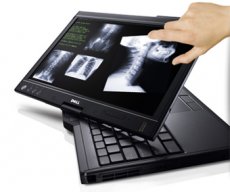
Dell Introduces The Latitude XT2 Notebook PC

The latest addition to Dell's lien-up is the the Latitude XT2 convertible tablet, a device with multi-touch screen capabilities as the star feature.


“As part of our commitment to deliver the best mobility experience, Dell revolutionized the tablet space with the first multi-touch capable product that allows customers to use the entire screen,” said Brett McAnally, director, Dell Product Group. “Today, we’re extending that leadership with the Latitude XT2 to deliver more performance, security and manageability.”

The Latitude XT2 comes with an initial price of $2,399 and includes (or may include, depending on how much you want to spend) the following hardware specs:

- 1.2 or 1.4GHz Intel Core 2 Duo ULV SU9400 processor
- Intel integrated GMA 4500MHD graphics
- 12.1-inch LED backlit capacitive touch-screen with EM Digitizer pen
- up to 5GB of DDR3 1066MHz
- up to 120GB 5400RPM SATA disk or 128GB SSD
- 802.11a/g/n WiFi and gigabit Ethernet
- eSATA, 2 USB 2.0 slots, firewire
- ExpressCard 54 slot
The laptop weighs 1.72-kg and comers with a with 6-cell battery supposed to last for over 11 hours.

Palm Pre Launching Sooner Than Expected

The Palm Pre has been rumored to hit the market in late Spring and now the rumors seem more true than ever.


It appears that Sprint (the exclusive carrier for the Palm Pre) has already started to train its employees for the new phone.

"I would like to inform that Sprint is in the process of providing the training for the new Palm Pre. Once it's launched, Sprint will be ready to serve their valued customers regarding the Palm Pre," reads a recent report.

With employees already getting a grip on the new device, is quite clear that the release date itself was moved forward as well. Sprint prefers to keep quiet for the time being.

However, the company’s marketing campaign already mentions the new device, so the best bet is on a release moved ahead of schedule. Let’s just hope it’s not a rushed release as well.

Qualcomm Presents New HSPA+ Chipset

Qualcomm's HSPA+ product portfolio has been updated with the addition of a new family of chipsets, aimed at mobile handsets and data cards.


The new HSPA+ chipsets include the Mobile Station Modem (MSM) MSM8260, MSM8660 and MSM8270 solutions for mobile handsets and feature the following:
- Scorpion 1.2 GHz processor and 600 MHz DSP for high levels of web application and multimedia performance
- Support for innovative 3D/2D user interfaces and console-quality gaming via dedicated, high-performance graphics engines
- 16 megapixel camera
- Full 1080p HD video playback and recording
- Support for DTS/Dolby 5.1 surround sound
- Integrated Assisted-GPS, including support for Glonass satellite services
- Support for stunning 24-bit WXGA (1280 x 800) displays
- 45nm process technology for ultra-low power consumption
“As HSPA+ becomes an increasingly popular option for network operators looking to maximize their investments in 3G networks, Qualcomm has expanded its HSPA+ product roadmap to now include a comprehensive family of chipsets covering multiple tiers of the wireless market,” said Alex Katouzian, vice president of product management for Qualcomm CDMA Technologies. “The advanced connectivity, multimedia and processing capabilities of our chipsets are enabling the next-generation mobile user experience.”
The Mobile Data Modem (MDM) MDM8220 is aimed at data applications.
In addition, Qualcomm also unveiled the new transceiver QTR8610, which supports worldwide 3G bands and integrates Bluetooth, GPS and FM radio.

Oracle asks to depose Larry Page over Android suit

Google CEO Larry Page might soon face questioning related to his company's legal battle over Android and Java.
Oracle yesterday submitted a request to Judge Donna Ryu of the U.S. District Court for the Northern District of California to depose the Google co-founder and CEO regarding his involvement in his company's acquisition of Android Inc. in 2005. Foss Patents, a blog focused on software patents, was first to report on the newly filed request.
"Mr. Page is Google's CEO, and he reportedly made the decision to acquire Android, Inc., and thereby develop and launch the platform that Oracle now contends infringes its patents and copyrights," Oracle wrote in its letter to the judge. "Mr. Page also participated in negotiations that took place between Sun and Google regarding a Java license for Android and in subsequent communications with Oracle's CEO, Larry Ellison (whose deposition Google has requested). Oracle believes that Mr. Page's testimony will likely be relevant with respect to a number of other key issues in this case as well, including the value of the infringement to Google."
Google's Larry Page
Larry Page in 2008
(Credit: Stephen Shankland/CNET)
Oracle sued Google in August, alleging that the search giant violates a host of patents and copyrights related to Java, which Oracle acquired early last year from Sun Microsystems. In the lawsuit filed in District Court, Oracle argues that Java is a mobile operating system competitor to Android, and by allegedly using Java-derived technologies, Google's platform, including its Dalvik virtual machine, is violating Oracle's intellectual property.
In October, Google responded, asserting that Dalvik does not, in fact, violate Java patents and copyrights.
"Although software applications for the Android platform may be written in the Java programming language, the Dalvik bytecode is distinct and different from Java bytecode," Google wrote in its answer to Oracle's suit. "The Dalvik VM is not a Java VM."
But that didn't stop Oracle. Last month, the company filed another document with the District Court, saying that it's seeking $2.6 billion in damages from Google. A couple weeks earlier, Google filed a document that estimated the company would owe Oracle between $1.4 billion and $6.1 billion if it loses the case.
Oracle's filing yesterday, requesting to question Page, wasn't taken lightly by Google. In the same document, Google issued a response to Oracle's request, saying that Oracle is simply coming "to this court gnashing [its] teeth with an eleventh-hour attempt to cram extra depositions into the last couple weeks of the discovery period." The search giant said that Oracle's request to question Page is a "harassing demand" and "superfluous given the testimony already made available."
Central to Google's argument is Andy Rubin, Android Inc. co-founder and the current vice president for Android at Google. Google said that Rubin, who was already deposed by Oracle's attorneys, "is far more knowledgeable regarding the facts surrounding Google's acquisition of Android" than Page.
"Accordingly, the deposition of Mr. Page would be unnecessarily duplicative of testimony already available through other witnesses, and would only serve Oracle's goal of harassing Google's most senior executive," Google wrote in its response.
If Oracle is allowed to question Page, the company will need to hurry. According to the documents, depositions must be completed by July 29.
In addition to Page, Oracle has asked to question former Google employees Dipchand Nishar, who worked on the company's mobile efforts, and Bob Lee, who "led the core library development for Android." Tim Lindholm, a current Android engineer and former employee of Sun, has also been cited in Oracle's requests for deposition.

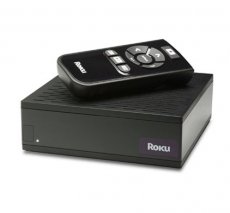
Roku Now Streams Amazon Video On Demand

Roku customers are in for a new pay-per-view treat: Amazon Video On Demand is coming on the Roku digital video player.


"We are excited to give our customers access to Amazon's massive catalogue of top movies and TV shows – including many new releases", said Anthony Wood, Roku CEO and Founder. "The launch of Amazon Video On Demand on Roku demonstrates our commitment to creating an open platform that instantly delivers the entertainment consumers want directly to their TVs."
The Roku digital video player is available for $100 and will enable users to browse and take their pick from Amazon's library of over 40,000 movie and TV titles. New movies will cost $15, older titles $5 less and so forth.
Current Roku customers will receive a free and automatic software update sometimes next week, which will allow them access to the Amazon Video on Demand service.
The company added that customers will continue to have access to Netflix Instant Watching, meaning over 12,000 movies and TV episodes for a low monthly fee.

Apple's A6 chip in pilot production

Apple has consigned trial production of its future A6 processor to Taiwan Semiconductor Manufacturing Company and not Samsung, its traditional manufacturing partner, according to a Reuters report.
The A6 processor is still a distant destination on Apple's chip road map. It isn't expected to appear in products until 2012, and analysts believe it will be quad-core, a first for an Apple A series chip. The A5, used in the iPad 2, is a dual-core processor.

After the A5 come the A6, which may mark a shift to TSMC and away from Samsung.
(Credit: CNET)
Talk of Apple jumping to Taipei-based TSMC has been driven, in part, by the legal skirmishes between Apple and Samsung. The latter has been Apple's sole manufacturing source for A4 and A5 processors.
Linley Gwennap, who heads the Linley Group, a chip consulting firm, told CNET last month that he expects Apple to continue to consign production of the A5 processor to Samsung but switch to TSMC for the A6. A possible alternative scenario would have Apple getting TSMC to make a "shrink"--a version of the chip with smaller geometries--of the A5 too. That version of the A5, for example, could be used in a future iPhone 5.
Of course, the most significant development would be for Apple to actually contract with TSMC for commercial, high-volume production of the A6. That hasn't been decided yet, according to Reuters. That said, TSMC is the largest contract chip manufacturer in the world and it seems likely that the relationship with Apple would move forward.
Intel's name is popping up, too. Piper Jaffray analyst Gus Richard told CNET last month that Intel, the largest chipmaker in the world, is aggressively seeking business with Apple. But that relationship is much more speculative at this point than the Apple-TSMC ties.

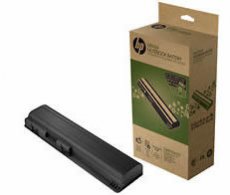
Hewlett-Packard Starts Selling Enviro Batteries

The Enviro batteries are the latest offer from HP: the company promises that the batteries won't lose any capacity over the lifetime of the notebook.


Don't get too excited, this time frame only cover three years. However, it's a better offer, and the company also claims that the batteries recharge much faster than traditional models.
The Enviro batteries are produced by Boston-Power under its Ecolabel-certified battery technology and are available under the Sonata label name. The new batteries are available as accessories for 18 existing notebook models representing approximately 70% of HP’s consumer notebook PC portfolio.
“From the beginning, our goal has been to help notebook computer users benefit from optimal mobility with dependable, high-performance, environmentally sustainable batteries,” said Boston-Power Founder and CEO Dr. Christina Lampe-Onnerud. “HP’s endorsement of Sonata is a great step forward in popularizing this battery technology.”
The new Sonata batteries retail for $149.99

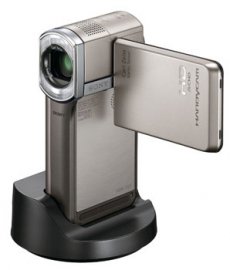
Sony Puts GPS On Its New Handycam Camcorder

The recently-announced Sony HDR-TG5V High Definition Handycam Camcorder comes with an unusual offer: a built-in GPS receiver.


The camcorder’s built-in GPS antenna and NAVTEQ digital maps enable the user to geo-tag his videos and photos and therefore document his destinations on a map. Geo-tagged content is marked by a push pin at each shot location and can be played back on the camcorder map index display on the 2.7-inch wide LCD touch panel.
The HDR-TG5V Handycam camcorder captures 1920x1080 high-definition video and 4 MP photos. Under the hood, the camera packs 16GB of embedded memory, which translates into over six hours of high definition video footage (LP mode).
“Travelers are looking for high-quality products that focus on performance and portability,” said Kelly Davis, director of camcorder marketing at Sony Electronics. “This new model has a titanium body with a premium hard coating enhancing durability and it’s packed with high-performance features—like GPS and Smile Shutter™ technology—that deliver the best combination for your travel experiences.”
The HDR-TG5V camcorder will ship in May for about $1,000. An optional travel kit (Sony ACC-TCH5) with a battery, travel charger and pouch will be available for about $100.

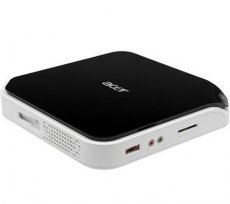
Acer Launches AspireRevo

Acer’s latest release on the market is the Acer AspireRevo, a new nettop based on the the Nvidia Ion platform, which combines the Intel Atom 230 processor with the Nvidia Ion graphics processor.


The new release is marketed as a “true entertainment center for the entire family”, as it offers access to music, video and images, but can also transmit and stream HD content and be used as a gaming console.

“The Acer AspireRevo with our new NVIDIA ION GPU is a shockingly small home PC,” said Drew Henry, general manager for MCP products at NVIDIA. “You will be stunned and amazed watching HD videos, editing photos, surfing the web and playing the latest online games.”

Under the hood, the Acer AspireRevo packs together 802.11b/g/draft-n Wi-Fi, Ethernet, HDMI, DirectX 10, up to 4GB RAM, SSD option, Mini PCI Express slot, Windows Vista and the option to VESA mount the device.

The device also comes packed with a game controller with 3D motion sensors offering numerous functionalities: a pointing-device (air mouse) or remote control for the media center.

Share

Twitter Delicious Facebook Digg Stumbleupon Favorites More