Apple Wins Global Smart Phone Crown, Nokia 3rd Now

Apple, followed closely by Samsung Electronics, overtook Nokia in global smartphone market share during the second quarter.

Stanford researcher exposes Microsoft's Wi-Fi database

A Stanford University researcher has created a Web page allowing people to query Microsoft's massive database for the locations of their--or someone else's--laptops, cell phones, and other Wi-Fi devices.

Logitech Wireless Solar Keyboard

We met with Logitech the other day to see some of the company's upcoming products (sorry, we can't tell you about them yet, but there's some cool stuff coming), and the folks there offered to give away one of Logitech's nifty new solar-powered wireless keyboards for Windows users, the K750.

HTC 10-inch Puccini tablet outed in official-looking renders

Thanks to new leaked images, we now have a good idea as to what to expect from the 10-inch HTC Puccini.....

Acer's Aspire Ethos 8951G review: Need a laptop with a detachable touch pad?

Few things surprise us more than when laptop shoppers tell us that though they are planning to keep their new computer permanently chained to a desk (to essentially act as a desktop PC), they intend to buy a 13-inch (or even a 14- or 15-inch) laptop. If you're removing portability from the equation completely, there's little reason to ignore one of the most fun categories of laptops: the massive 18-inch desktop replacement.

Saturday, July 16, 2011

For Netflix, there's a way out of pricing mess

Netflix customers are making perhaps the most damning comparison a day after the rental service announced it was raising its prices: They're saying Netflix is just like the cable guys.
Seething blog posts and comments are piling up across the Web in reaction to a price hike that means customers who want access to DVDs as well as streaming video must now pay $15.98, up from the $9.99 they used to pay for both.
Netflix founder and CEO Reed Hastings may feel a little shell-shocked by the testy reaction. Hastings and his staff have enjoyed nearly unprecedented customer loyalty and popularity as the Web's most popular movie-rental service. Hastings is the guy who championed consumers against Hollywood and helped take a digital baseball bat to the much-loathed late fees from Blockbuster and traditional video-rental services. He is the guy who mailed movies to users' front door when they used to have to drive to rent. Netflix is regularly at the top of consumer-satisfaction polls. Would we have a term like cord-cutting without Netflix?
Angry Netflix customers are taking to the Web to communicate with CEO Reed Hastings, seen here in a file photo. They are telling him to reduce price hike.
(Credit: Greg Sandoval/CNET)
 And that's why the backlash has been so extreme. Many of the company's 23 million subscribers are outraged over the money issue and they're just plain disappointed in the way Netflix is behaving. Dumping a 60-percent price increase on customers and casually announcing the move in a blog post without warning isn't what Netflix is supposed to be about. There's no doubt that Netflix's brand is suffering. Good will and trust is being drained, and quickly.

I wrote in an earlier piece that Netflix is still the best deal available, but plenty of people don't want to hear that. Fair enough. The increase is too much for some and they will bolt. But for those on the fence, I say start up a petition if one hasn't been circulated already, complain on the company's blog, make yourself heard before giving up on the company.
Hastings just might listen. In 2008, Netflix reversed a decision to eliminate user profiles, the account feature that enabled users to split movie rentals among separate queues for a household, after receiving a torrent of complaints and after an online petition was circulated.
The way for Netflix to unwind this is to offer consumers a break on the $15.98 or let keep two discs out for that price. Forcing subscribers to pay as much to rent DVDs as they do for streaming when many of them use the discs only to supplement the streaming library just doesn't seem fair.
Here's another hint, at minimum, Hastings needs to make a statement and own up to this and explain the need for it to customers. The announcement was mishandled and the company right now appears arrogant. Sure, Netflix has a good track record with consumers, but the company's customers have helped spread the word about the service for years and Netflix needs to continue to treat them as a partner.

Even if Netflix is a better deal than competitors, there's another option: going without streaming video. In this era of belt tightening, it would be easy just to pitch it all.
There's no denying that Netflix is facing skyrocketing costs for films and television shows. The truth is that a price increase was inevitable. Hollywood execs have told me that they are still learning how to price Internet-distributed content and they believe they have undervalued their content in initial dealings with Netflix. In addition, more competitors are entering the market. More competitors means content creators can hope for a bidding war.

Click photo to read 'Angry Netflix subscribers--so, who has a better deal?'
(Credit: Screen shot by Greg Sandoval/CNET)
Don't believe it? Take a look at Wall Street's mute reaction to the pricing move. The company's share price went up after Netflix announced the increase yesterday and in afternoon trading today the stock was up 2 percent and just under $300 a share. Analysts who cover Netflix have predicted price hikes for a long time because there were few other ways the company could afford to expand its library--which customers are discovering is lacking in some important content areas.
When confronted by the argument that Netflix must raise prices to pay for content, one of my CNET colleagues, Maggie Reardon, may have succinctly sized up what many Netflix users are saying: "Who cares? That's their problem. Paying for content is the excuse that cable companies have used for years to justify price hikes."
The longer Netflix waits to respond to customer outrage, the more likely it is that negative attitude will be set in stone.

Syncopate enters Korean and Chinese online games market

The company plans to source games from Chinese and Korean developers, and release them in Russia, CIS and European countries


Russian company Syncopate is also considering the possibility of publishing some Russian browser MMORPG games in China and Korea. Initial investment was estimated at around $20 million, part from founders and part of the investment raised from outside investors.

Syncopate’s target is to release 5 to 10 new games annually on promising markets like  Russia, CIS and European countries. The company plans to take 30% share of MMORPG market in Russia and CIS, as well as to win a share of the European market.

An innovative online game platform, GameNet is at the core of Syncopates publishing strategy. The new platform will link up the games, published under the same brand, expand their content and unite the players in one big community.

Despite growing interest in online games market, the lack of professional expertise held investor back from this market. The founders of Syncopate plan to develop a new service, evaluation of investment attractiveness of Russian and international projects. The company also intends to offer financial assistance to Asian games developers and start-up studios.

Windows 7 overtakes Vista and XP

According to the measurements of NetApplications, Windows 7 (perhaps the most complex software platform for mass consumption) has reached in only three months the market share reached by Vista in almost a year.


Windows 7 ended January with a usage rate of 7.5%, a level that its predecessor, Windows Vista  reached only after 11 months from its launch in January 2007.

In January also both Windows XP and Vista have lost market share in favor of Windows 7.

Windows XP has reached  66.3% market share, down 1.46%. Vista has lost 0.5 percent and reached 17.4% share.

If the trend of the last three months doesn’t change, Windows 7 will overcome vista and will be ranked second in the top of the most popular operating systems in June.

iPAD

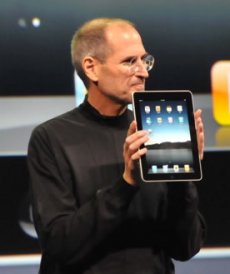
After a long wait Apple Inc unveils their latest product. "Good morning, and thank you all for coming today. We want to kick off 2010 by introducing a truly magical and revolutionary new product." said today Apple Chief Executive Steve Jobs.

The new device it is the missing link between a smartphone and a laptop - "Everyone uses a laptop and/or a smartphone. The question has arisen lately: is there room for a third category device in the middle?"
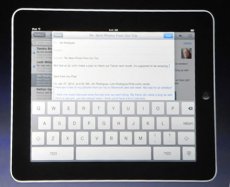
It's 0.5-inches thin, weighs just 1.5 pounds (thinner and lighter than any notebook) and have a 9.7-inch IPS display.

iPad is powered by apple own custom silicon chip called the A4 at 1GHz. It come with 16, 32, or 64GB of flash storage and a 10h battery. It's got the latest in wireless: 802.11n, WiFi, and Bluetooth 2.1 + EDR. Have also: accelerometer, compass, speaker, mic, dock connector.


Calendar, address book,  maps app with Google Maps, iTunes, full qwerty keypad are few of the applications built right into the iPad.

Apple customers will be able to use the iPad to watch videos, surf the Web, play games and read electronic books.

As Steve Jobs said: "That's a little overview, but there's nothing like seeing it, so I'd like to show you now. Using this thing is remarkable - it's so much more intimate than a laptop, and it's so much more capable than a smartphone."

ITC says HTC violating two of Apple's patents

Apple scored a legal victory today when the U.S. International Trade Commission made an initial ruling that HTC had violated two of its patents.

Apple claims HTC's phones illegally use patented features found in the iPhone.
(Credit: Apple)
The ITC administrative law judge's initial determination was that HTC infringed on two of the 10 patents Apple had filed a complaint over in March 2010, according to an HTC statement. The ITC still needs to make a final ruling on the complaint. A loss carries the threat that HTC's products would be banned from coming into the U.S., and Apple only needs to get a favorable decision on one of the patents.
HTC said it would appeal the decision.
"HTC will vigorously fight these two remaining patents through an appeal before the ITC commissioners who make the final decision," said Grace Lei, general counsel for HTC. "This is only one step of many in these legal proceedings."
An Apple representative referred back to the company's initial statement when it filed the complaint last year. "We think competition is healthy, but competitors should create their own original technology, not steal ours," Apple CEO Steve Jobs said in the release.
If an appeal isn't successful, HTC will have to come to a settlement with Apple. The loss would be a defeat for all Android supporters and could embolden Apple to take additional legal action.
AllThingsD reports that two patents relate to a "system and method for performing an action on a structure in a computer" and a "real-time signal processing system for serially transmitted data."
FOSS patents, meanwhile, said the patents in dispute make up the core of Android's operating system, and could have repercussions on all Android handset manufacturers.
The latest development is also a major blow to HTC, which has made strides in building market share and a brand with its line of Android-powered smartphones, many of which feature the company's own Sense user interface. HTC was the first Android supporter that Apple went after, signalling the growing threat of Google's software to iOS and the iPhone franchise.
On Monday, Apple had filed a second complaint with the ITC, claiming that five additional patents were being illegally used, including one used for scrolling operations, another for programmable tactile touch-screen displays, and one for a double-sided touch-sensitive panel, all of which are used in another complaint against Samsung.
The other relates to the ability to scroll, zoom, and rotate content on a screen, while the last references "portable computers."
The five additional patents weren't a part of this ruling.
Technology companies in recent years have increasingly used the ITC to settle their disputes because the process is seen as more efficient than the federal courts. In addition, the threat of a embargo on products typically forces companies to settle quicker.
HTC is considered the most vulnerable legally of the Android partners because it lacks a robust portfolio of patents that act as a potential shield. Earlier this month, HTC purchased S3 Graphics, largely because of a collection of patents that the ITC administrative law judge recently determined were used illegally by Apple.
Apple, meanwhile, is still in the middle of a similar patent fight against Samsung Electronics.

Google wields data openness against Facebook

Google is accelerating efforts to make its new social network look like a more open and attractive alternative to Facebook.
The latest: Google will allow users to export a list of Web sites that they've recommended through the "+1" button.
Brian Fitzpatrick tells reporters on a Google Hangout video chat today that openness makes Google work hard to keep users from leaving.
While only a modest change, it highlights how Google is trying to use openness--the ability to extract your data from its servers with the click of a button--to differentiate itself from its far larger and more established rival.
"When your users can leave you you're going to work as hard as you can to keep them," Google engineering manager Brian Fitzpatrick told reporters during a video conference today using Google Hangout. A service announced last month called Google Takeout makes it easy to move to rival services.
Facebook, on the other hand, has taken a different approach to who owns user data. Last week, it blocked a tool written by developer Mohamed Mansour that allowed users to extract contact information their friends have shared with them.
This week, it blocked another by Open-Xchange, which allowed people to reconstruct their Facebook contact list on Google+.
It's not exactly a new debate: Google tried to ratchet up the pressure on Facebook to be more open last November, although the discussion at the time was about searchability rather than the possible threat of Google+. An early round in the skirmish took place as far back as 2008.
Facebook, of course, is in the enviable position of being enmeshed in the daily lives of hundreds of millions of users. The hassle and inconvenience of reconstructing a social network on a rival's service, coupled with what economists call network effects, is a significant barrier to Google+ becoming as successful.
Facebook does allow users to download much of their data, but not instantly and not in a format that can be easily imported to rival services. It's "not in an open portable format at all," says Fitzpatrick, the Google manager. When asked why it wasn't, he declined to speculate: "I have no explanation."
A spokesman for Facebook did not immediately respond to a CNET request for comment.
Facebook has taken some positive steps in the past, says Steve Repetti of the Data Portability Project, which advocates for ready data availability in a useful format.
"Now what they're doing is they're picking and choosing and removing functionality," Repetti says. "'We did it. But now we're undoing it because we don't want to benefit Google.'"
Mansour's now-blocked Chrome extension allowed users to copy the information your Facebook contacts have shared with you--name, e-mail address, phone number, birthday, Web site, address--then letting you save it as a spreadsheet file or import it directly into your Gmail address book.
It arguably ran afoul of Facebook's terms of service, which says: "You will not collect users' content or information, or otherwise access Facebook, using automated means (such as harvesting bots, robots, spiders, or scrapers) without our permission."
Repetti of the Data Portability Project says: "There has to be an element of accountability. If you say you're going to be open, be open. Even if you say you're not open, at least I know that going in."

Friday, July 15, 2011

OLPC: Give One Get One Campaign Starts Over

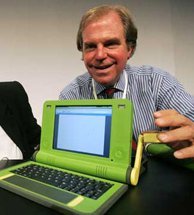
The One Laptop Per Child (OLPC) project decided to launch once again its Give One, Get One campaign, in hope that this way more laptops will be delivered to children living third world countries.


This time the campaign has been launched in both Europe and the US and will close on December 31.
As expected, Amazon will be the only one handling the funds.
In case you have forgotten, the campaign goes as follows: those who choose to buy $399 laptop will thus help the OLPC send another such computer to a person in a third world or developing country.
The first Give One, Get One campaign started November 12 and was supposed last initially only two weeks. The program was only available in North America.
Later on, It was decided to keep it going until the end of the year. Officially, the program had been extended because "many people have asked for more time to participate, either individually or in order to organize local and national groups to which they belong". Or at last that's what OLPC founder Nicholas Negroponte claimed at the time.

Toshiba Announces The First 512 GB SSD

The first 2.5-inch 512-gigabyte GB SSD was born in the Toshiba clan, the company eagerly announced.

The Japanese company stated that its new SSD model is based on 43 nm Multi-Level Cell NAND and it will be used in notebook computers, gaming and home entertainment systems.

"The solid state drive market is evolving rapidly, with higher performance drives to meet market requirements, and differentiated product families targeted for appropriate applications,” said Mr. Kiyoshi Kobayashi, Vice President of Toshiba Corporation's Semiconductor Company. "This new 43nm SSD family balances value/performance characteristics for its targeted consumer applications, through use of MLC NAND and an advanced controller architecture."

In addition to the 512GB drive, Toshiba's 43nm NAND SSD family also includes smaller SSD in size of 64GB, 128GB, and 256GB, available in both 1.8-inch or 2.5-inch drive enclosures or as SSD Flash Modules.

The second generation SSDs utilizes an advanced MLC controller, thus achieving higher read/write speeds, parallel data transfers and wear leveling to optimize performance, reliability and endurance. According to Toshiba, the read speed of the new drives can reach a maximum sequential read speed of 240MBp) and maximum sequential write speed of 200MBps.

In addition, the drives offer AES data encryption to prevent unauthorized data access.

Sony Announces Adds Four New Colors To Its PSP Lineup

Four new Sony PSP colors will be released this Spring, the Japanese giant announced. For the time being, the release has been scheduled only for Japan


The new additions will be known as “Vibrant Blue,” “Radiant Red,” “Bright Yellow” and “Spirited Green,” each priced at 19,800 yen ($222).
Consoles in “Vibrant Blue” and “Radiant Red” will become available on March 5, while the “Bright Yellow” and “Spirited Green” are scheduled two weeks later, on March 19, 2009.
In addition, Sony will release the PSP Carnival Colors Value Pack, which includes the following:
- a PSP in newly introduced color
- a 4GB Memory Stick PRO Duo
- an original PSP pouch
- a wrist strap and a cloth
Last but not least on Sony's list of releases is the “Battery Pack (2200mAh),” featuring a battery pack (2200mAh), a battery cover in newly introduced color. The new bundle will retail for 5,500 yen ($62).

Share

Twitter Delicious Facebook Digg Stumbleupon Favorites More